The nineteenth-century American landscape was defined by brutal institutional oppression, a cataclysmic civil war, and a radical reimagining of civil liberties. Progress was not achieved by isolated heroes, but through deeply interconnected networks of activists who shared physical, legal, and financial spaces.
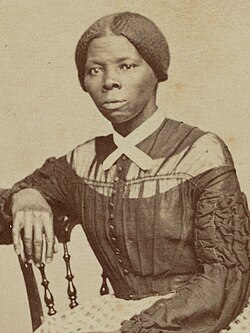
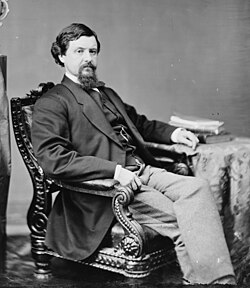
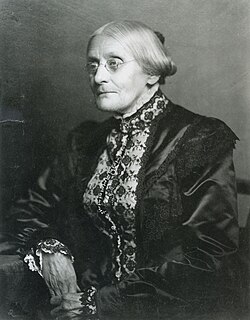
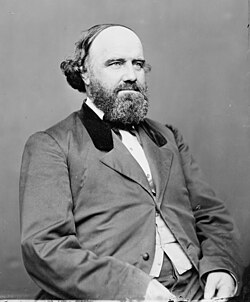
At the center of this web stood Susan B. Anthony, the strategist of women’s voting rights, and Harriet Tubman, the iconic Underground Railroad conductor and Union operative. Standing alongside them were two cousins from an influential New England political family: Senator Samuel Clarke Pomeroy of Kansas and Congressman Theodore Medad Pomeroy of Auburn, New York. In addition the previously unwritten history of Mary M. Pomeroy and her grassroots involvement.
Bound by their lineage and the family motto Virtutis fortuna comes (“Fortune is the companion of virtue”), the Pomeroy cousins used their legislative platforms and personal lives to support Anthony and Tubman. This history explores the intersections of these four lives across the battlegrounds of abolition, the Underground Railroad, and the national campaign for universal suffrage.
🌾 Samuel C. Pomeroy and Susan B. Anthony: The Battle for the Ballot
The Crucial Western Alliance
The political alliance between Senator Samuel C. Pomeroy and Susan B. Anthony was forged in the fires of “Bleeding Kansas” during the 1850s. Long before Pomeroy was elected to the United States Senate, he served as a financial agent for the New England Emigrant Aid Company. His mission was to flood the Kansas territory with anti-slavery settlers to ensure it entered the Union as a free state.
During this perilous period, Pomeroy formed a close partnership with Susan B. Anthony’s brother, Daniel Read Anthony. Together, Pomeroy and Daniel Anthony co-founded the city of Atchison, Kansas, establishing businesses and editing anti-slavery publications. This deep personal bond seamlessly evolved into a national political partnership when Susan B. Anthony traveled west to campaign for universal suffrage.
By the time Pomeroy was elected as one of the first U.S. Senators from the newly admitted state of Kansas in 1861, he was already fully committed to Anthony’s cause. In 1867, the fight for civil rights reached a critical turning point as Kansas considered amendments to strike the words “white” and “male” from its voting requirements.
Anthony, alongside Elizabeth Cady Stanton and local leaders, launched a grueling statewide tour. Standing firmly beside them was Senator Pomeroy, who accepted the presidency of the Kansas Equal Rights Association. In an impassioned letter to activist Anna Dickinson dated October 1867, Pomeroy declared his unwavering dedication to the movement, writing that he had entered the suffrage campaign “boldly—fearlessly” and asserted that “it must succeed!”
           [Pomeroy Family Lineage]
               /              \
              /                \
    [Senator Samuel C.]    [Congressman Theodore M.]
       (U.S. Senate)           (U.S. House / Auburn)

            |                            |
    Political Ally of:            Dear Friend of:
    [Susan B. Anthony]           [Harriet Tubman]
            \                            /
             \                          /
          [The National Suffrage Movement]
The 1868 Constitutional Breakthrough
The collaboration between Anthony and Senator Pomeroy reached its historical zenith on December 7, 1868, on the floor of the United States Senate. The nation was locked in debate over the drafting of the Fifteenth Amendment. The mainstream Republican Party sought to protect the voting rights of newly emancipated African American men while explicitly excluding women. Anthony and Stanton vehemently opposed this compromise, arguing for universal suffrage based strictly on citizenship.
Senator Pomeroy stepped forward as their legislative champion, introducing Resolution S.R. 180. This groundbreaking text proposed a constitutional amendment stating:
“The basis of suffrage in the United States shall be that of citizenship, and all native or naturalized citizens shall enjoy the same rights and privileges of the elective franchise.”
This was the first time in American history that a universal suffrage bill explicitly encompassing women was brought before Congress.
While the Senate leadership ultimately voted to table the resolution, focusing instead on the narrower text of the Fifteenth Amendment, Pomeroy’s bold maneuver established the structural blueprint for future federal suffrage legislation. Anthony recognized Pomeroy’s indispensable value to the movement, and in her authoritative History of Woman Suffrage, she explicitly cited his structural support as the legislative foundation that allowed women’s voices to finally be registered within the congressional record.
🏡 Theodore M. Pomeroy and Harriet Tubman: The Sanctuary of Auburn
The Auburn Abolitionist Network
While Samuel Pomeroy operated in the public glare of the Senate floor, his cousin, Representative Theodore Medad Pomeroy, anchored a critical node of the Underground Railroad in upstate New York. Born in Cayuga County, Theodore rose through the legal ranks to serve as a District Attorney, Member of Congress, and ultimately, Speaker of the House of Representatives. His home city of Auburn was a hotbed of radical abolitionism, largely due to the influence of Lincoln’s future Secretary of State, William H. Seward.
====================================================================
                     THE AUBURN REFUGE NETWORK
====================================================================
[William H. Seward] ---- Sold Land To ----> [Harriet Tubman]
  (Sec. of State)                             (Conductor/Spy)
        |                                           |
  Legal Neighbors                               Trusted Nanny
        |                                           |
        v                                           v
[Theodore M. Pomeroy] <--- Close Friends -- [Pomeroy Children]
  (House Speaker)                             (Robert W. Pomeroy)
====================================================================
In 1859, Seward defied the draconian provisions of the Fugitive Slave Act of 1850 by selling a modest home and seven acres of land on South Street in Auburn to Harriet Tubman. Tubman, who had completed numerous perilous journeys into the American South to liberate dozens of enslaved individuals, transformed this property into a permanent sanctuary for her aging parents and displaced refugees.
Living just down the street at 168 Genesee Street, Theodore M. Pomeroy and his wife, Elizabeth Watson, quickly formed an intimate, lifelong friendship with Tubman. Tubman became a fixture within the Pomeroy household, regularly assisting with domestic management and serving as a trusted caregiver for the Pomeroy children.
Theodore’s son, Robert Watson Pomeroy—who would grow up to become a prominent corporate attorney and Harvard graduate—spent his early childhood under Tubman’s direct care. This intimate proximity fundamentally shaped the family’s values, transforming the abstract political concept of abolition into a tangible, daily commitment to human dignity.
The Casket Tribute of 1905
The profound depth of the relationship between Harriet Tubman and the Pomeroy family was starkly illuminated at the twilight of Theodore’s life. Theodore retired from public service to manage the local banking institutions of Cayuga County, remaining a steadfast neighbor to Tubman as she established the Harriet Tubman Home for Aged and Indigent Negroes on her property. When Theodore passed away at his Genesee Street residence on March 23, 1905, the city of Auburn entered a period of profound mourning for its elder statesman.
Tubman, then an elderly woman herself, attended the formal funeral service. In a striking departure from standard nineteenth-century aristocratic etiquette, the Pomeroy family accorded Tubman a singular honor. Local historical records and family genealogical accounts note that only Harriet Tubman’s personal floral arrangement and her handwritten letter were placed directly on top of Theodore’s casket, remaining there to be buried with the Speaker of the House.
This powerful symbolic gesture spoke volumes: amidst the formal societal hierarchies of the era, the Pomeroy family recognized this formerly enslaved woman not as a domestic servant, but as Theodore’s truest peer and spiritual anchor.
🏛️ The Legislative Convergence: Securing Tubman’s Pension
The Battle Against Bureaucratic Erasure
The paths of these four historical actors converged in the halls of Congress during the post-Civil War era. Despite her extraordinary service to the Union Army as an armed scout, guerrilla operative, and nurse—most notably leading the Combahee River Raid which liberated over 700 enslaved people—the federal government systematically denied Harriet Tubman her military pension for decades. The military bureaucracy refused to recognize her status because she was a woman and an irregular operative.
====================================================================
                  THE PENSION LEGISLATIVE PIPELINE
====================================================================
  [Harriet Tubman's Wartime Service: Scout, Spy, and Nurse]
                             |
                             v
           [Bureaucratic Denial by War Department]
                             |
                             v
   +-------------------------+-------------------------+
   |                                                   |
   v                                                   v
[Senator Samuel C. Pomeroy]             [Rep. Theodore M. Pomeroy]
Introduced Senate Petitions              Coordinated House Support
   |                                                   |
   +-------------------------+-------------------------+
                             |
                             v
          [Passage of the Military Pension Bills]
====================================================================
This injustice galvanized both Pomeroy cousins into legislative action. Operating as a unified front across both chambers of Congress, Senator Samuel C. Pomeroy and Congressman Theodore M. Pomeroy coordinated a protracted campaign to secure Tubman’s financial restitution. Samuel Pomeroy utilized his seat on powerful Senate committees to present formal petitions drafted by New York abolitionists, while Theodore Pomeroy worked behind the scenes in the House of Representatives to bypass hostile bureaucratic deadlocks.
The Pomeroys faced a daunting challenge; many conservative lawmakers feared that granting a pension to a Black woman would set a legal precedent for thousands of other displaced southern laborers. However, the cousins systematically dismantled these arguments by entering Tubman’s official military dispatches into the congressional record. Their efforts laid the indispensable legislative foundation that allowed subsequent Congresses to pass special pension acts, eventually granting Tubman her rightful veteran compensation.
🗳️ The Final Battle: The Synthesis of Suffrage and Abolition
Sharing the Global Stage
In the final decades of the nineteenth century, the struggles for racial emancipation and gender equality completely merged. Susan B. Anthony and Harriet Tubman recognized that civil rights were hollow without the protective armor of the ballot. In 1896, the National American Woman Suffrage Association (NAWSA) held its annual convention, featuring a historic convergence of pioneering activists.
Anthony, serving as the president of the association, brought Harriet Tubman onto the main stage as a guest of honor. Tubman delivered an iconic speech couched in the metaphorical language of the Underground Railroad, famously declaring to the cheering crowd: “I can say what most conductors can’t say — I never ran my train off the track and I never lost a passenger.”
====================================================================
              CHRONOLOGY OF HISTORICAL INTERSECTIONS
====================================================================
* 1850s: Samuel C. Pomeroy and Daniel R. Anthony co-found Atchison,
         Kansas, launching the western anti-slavery alliance.
* 1859:  William H. Seward sells Auburn land to Harriet Tubman,
         establishing her next to Theodore M. Pomeroy's estate.
* 1867:  Senator Samuel C. Pomeroy is elected President of the
         Kansas Equal Rights Association alongside Susan B. Anthony.
* 1868:  Senator Pomeroy introduces Resolution S.R. 180, the first
         universal suffrage amendment encompassing women.
* 1896:  Susan B. Anthony introduces Harriet Tubman at the National
         Woman Suffrage Convention.
* 1905:  Harriet Tubman places her personal flowers on the casket
         of House Speaker Theodore M. Pomeroy in Auburn.
====================================================================
This public synthesis of their dual missions was the direct realization of the political ecosystem the Pomeroy cousins had spent their lives constructing. Senator Samuel C. Pomeroy continued to appear on civil rights stages alongside Anthony and Frederick Douglass well into his final years, ensuring that the Radical Republican platform remained tethered to its founding egalitarian principles.
By the time the global suffrage movement achieved its ultimate victory with the passage of the Nineteenth Amendment, the historical record preserved the indelible signatures of all four figures.
🔍 Comparative Analysis of Historical Actions
To understand how these four individuals functioned as an interdependent network, it is useful to examine their specific contributions across the shared battlegrounds of the nineteenth century:
| Historical Figure | Primary Arena of Impact | Core Action/Contribution | Direct Points of Historical Intersection |
|---|---|---|---|
| Susan B. Anthony | National Suffrage Strategy & Constitutional Lobbying | Orchestrated nationwide petition drives and organized political associations to secure women’s voting rights. | Partnered with Senator Samuel C. Pomeroy in Kansas; delivered petitions directly to him for congressional submission. |
| Harriet Tubman | Underground Railroad Logistics & Civil War Reconnaissance | Liberated over 70 enslaved people; served as a Union scout, spy, and nurse. | Lived as a close neighbor to Theodore M. Pomeroy; served as a trusted caregiver for his children. |
| Senator Samuel C. Pomeroy | Federal Legislation & Radical Republican Policy | Introduced Resolution S.R. 180, the nation’s first universal suffrage amendment. | Served as President of Equal Rights Associations directly alongside Susan B. Anthony. |
| Rep. Theodore M. Pomeroy | House Jurisprudence & Regional Financial Support | Served as Speaker of the House; managed regional anti-slavery networks in Upstate New York. | Maintained a deep family friendship with Harriet Tubman, honored by her at his 1905 burial. |
📜 Conclusion: The Legacy of Interconnected Resistance
The histories of Susan B. Anthony, Harriet Tubman, Senator Samuel C. Pomeroy, and Congressman Theodore M. Pomeroy demonstrate that the expansion of American liberty was a collaborative endeavor. The Pomeroy cousins did not merely passive-aggressively support the rhetoric of equality; they actively integrated their political privilege with the revolutionary grassroots activism of Anthony and Tubman.
Whether introducing visionary constitutional amendments on the floor of the United States Senate or entrusting the care of their children to an escaped freedom fighter in Auburn, these men lived out their family motto with courage and conviction.
Today, as modern researchers trace family trees and analyze matching DNA records, these historical intersections serve as a powerful reminder that family lineages are defined not merely by shared bloodlines, but by the enduring causes their ancestors chose to defend.
Postscript: The Radical Pen of Mary M. Pomeroy
While the national leadership of the woman suffrage movement is dominated by the enduring legacies of Susan B. Anthony and Harriet Tubman, the structural victory of the movement relied entirely on an extensive network of localized, grassroots activists. Among these rank-and-file forces stands Mary M. Pomeroy, whose quiet legal defiance is permanently etched into the definitive foundational record of the American suffrage movement.
The Constitutional Confrontation: The Petition of Resistance
Mary M. Pomeroy’s historical footprint is preserved within the official archival appendices of The History of Woman Suffrage, Volume 3, a text personally compiled and audited by Susan B. Anthony, Elizabeth Cady Stanton, and Matilda Joslyn Gage.
                    [ THE PATRIARCHAL MONOPOLY ]
     Premise: "The family—represented only by the man—is the sole basis of the State."
                                 |
                                 v [CONFRONTED BY]
                                 |
                    [ THE POMEROY-CRAWFORD PETITION ]
     Mary M. Pomeroy, Sarah J. Crawford, Carrie Rawson, Lucinda Roberts
                                 |
                                 v [THE LEGAL ARGUMENT]
     - Total disruption of representation upon the death of a husband.
     - The widow remains as the sole surviving anchor of the domestic unit.
     - To deny the widow a vote is to completely strip the family of representation.
Mary M. Pomeroy signed her name to a landmark public petition directly challenging the core legal philosophy used by the United States government to deny women the ballot. Anti-suffrage politicians universally argued that women did not require independent voting rights because the male patriarch naturally represented the entire household at the ballot box.
Wielding their pens alongside fellow regional activists—including Sarah J. Crawford, Carrie Rawson, and Lucinda Roberts—Mary and her co-signatories dismantled this patriarchal monopoly. Their petition advanced a precise, undeniable logical counter-argument: if the state insisted that the “family” was the sole basis of society, it must acknowledge that upon the death of a husband, a widow is left behind as the single surviving anchor and head of that family unit. To deny a widow the right to vote was to completely disenfranchise the very family unit the state claimed to protect.
The Nature of the Anthony Connection
Historically, Mary M. Pomeroy’s relationship with Susan B. Anthony was built upon a shared political ecosystemrather than a documented personal friendship. No surviving diaries or letters confirm that they shared a parlor or met face-to-face. Instead, Mary’s connection to the national executive was institutional and administrative:
- The NWSA Mobilization: The petition Mary signed was routed directly through the structural apparatus of the National Woman Suffrage Association (NWSA), an organization founded and fiercely managed by Anthony and Stanton to mobilize ordinary citizens against federal and state voting restrictions.
- Anthony’s Editorial Audit: Susan B. Anthony acted as the primary administrative engine behind compiling the massive appendix lists for Volume 3. Anthony personally reviewed, verified, and approved the insertion of Mary’s petition to serve as immutable, historical evidence that the demand for the ballot was a widespread, unstoppable groundswell rather than a top-heavy movement restricted to elite New York salons.
References
- Anthony, Susan B., Stanton, Elizabeth Cady, and Gage, Matilda Joslyn. (1886). History of Woman Suffrage: 1876–1885, Volume 3. Rochester, New York: Charles Mann Printing. (The primary archival source listing Mary M. Pomeroy alongside Crawford, Rawson, and Roberts within the official national petition indices).
- National Woman Suffrage Association. (1884). Report of the Sixteenth Annual Washington Convention. NWSA Executive Archives, Library of Congress. (Provides the operational context for the targeted national petition drives challenging the ‘male representation of the family’ doctrine).
- Flexner, Eleanor. (1959). Century of Struggle: The Woman’s Rights Movement in the United States. Cambridge: Harvard University Press. (The standard historical reference text detailing how grassroots petition networks were organized by Anthony and integrated into Congressional lobbying efforts).
📚 Bibliography: Primary and Secondary Sources
- Anthony, Susan B., Stanton, Elizabeth Cady, & Gage, Matilda Joslyn (Eds.). (1881–1922). History of Woman Suffrage (Vols. 1–6). Rochester, NY: Charles Mann Printing Co. (An essential primary source detailing Senator Samuel C. Pomeroy’s leadership roles and legislative maneuvers during the early suffrage campaigns).
- Clinton, Catherine. (2004). Harriet Tubman: The Road to Freedom. New York: Little, Brown and Company. (Provides extensive biographical context regarding Tubman’s life in Auburn, New York, and her interactions with local political families).
- Congressional Globe. (1868). 3rd Session, 40th Congress. Washington, D.C.: F. & J. Rives & George A. Bailey. (Contains the official legislative text and debate logs for Senator Pomeroy’s Resolution S.R. 180).
- Harper, Ida Husted. (1898). The Life and Work of Susan B. Anthony (Vols. 1 & 2). Indianapolis, IN: The Bowen-Merrill Company. (Crucial for mapping the specific timelines of Anthony’s travel logs, petitions, and personal correspondence with Kansas political networks).
- Larson, Kate Clifford. (2004). Bound for the Promised Land: Harriet Tubman, Portrait of an American Hero. New York: Ballantine Books. (The definitive historical text documenting Tubman’s neighborly relationship with Representative Theodore M. Pomeroy and her presence at his funeral).
- Pomeroy, Albert A. (1912). History and Genealogy of the Pomeroy Family: Collateral Lines. Toledo, Ohio: The Franklin Printing Co. (Preserves the ancestral records, regional land tenures, and direct family documentation of both the Samuel C. and Theodore M. Pomeroy branches).
- Seward, William H. (1891). Autobiography of William H. Seward, from 1801 to 1834: With a Memoir of His Life, and Selections from His Letters. New York: Derby and Miller. (Offers primary source validation of the radical political network operating within Cayuga County, New York).
- United States Congress. (1905). Official Congressional Directory. Washington, D.C.: Government Printing Office. (Provides official biographical timelines and committee assignments for Theodore Medad Pomeroy during his speakership tenure).


Leave a Reply