The Battle of Bunker Hill, fought on June 17, 1775, stands as one of the most significant and bloody engagements of the American Revolutionary War. While the historical narrative often focuses on prominent figures like William Prescott, Israel Putnam, and William Howe, the battle also served as a unique backdrop for the disparate paths of the Pomeroy family name.
On the American provincial side stood Seth Pomeroy, a sixty-nine-year-old veteran of the French and Indian Wars, a master gunsmith, and a freshly minted (though unaccepted) Brigadier General of the Continental Army. On the British regular side, the colonelcy of the 64th Regiment of Foot—whose light infantry and grenadier companies were heavily engaged in the assault—was held by Major-General John Pomeroy, an Anglo-Irish military officer and politician.
An analysis of these two men during the summer of 1775 reveals a stark contrast in the reality of 18th-century warfare. While Seth Pomeroy actively marched into the fray and fought on the front lines as a volunteer private, Major-General John Pomeroy was not physically present on the Charlestown Peninsula; he commanded his regiment remotely from Ireland, receiving detailed letters and dispatches about the slaughter of his men from across the Atlantic.
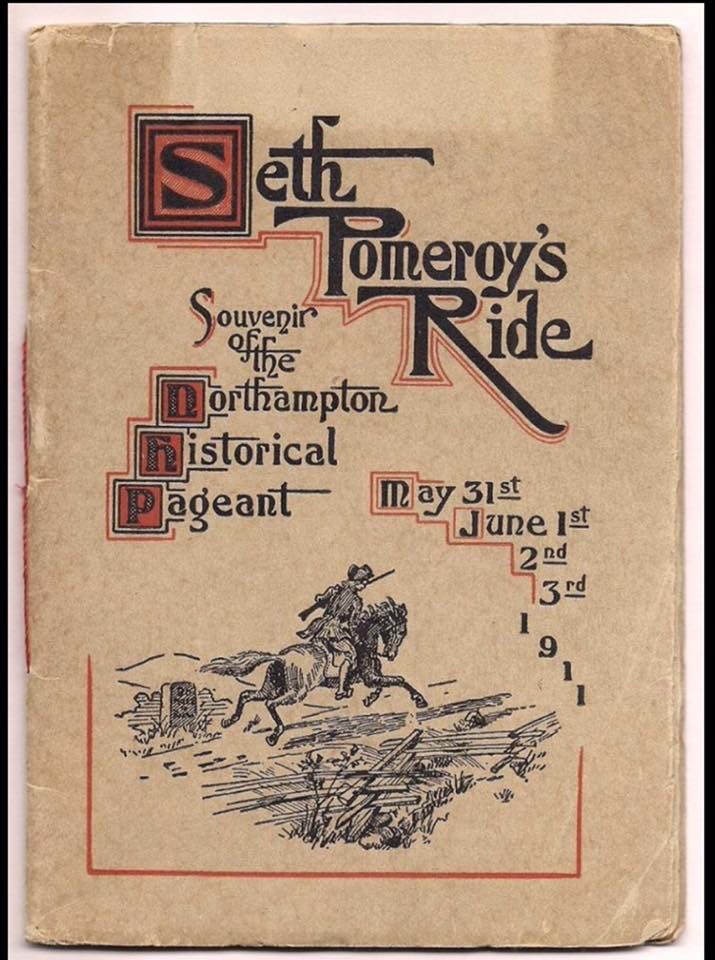
The Profiles of Two Generals
Seth Pomeroy: The Artisan Soldier
Seth Pomeroy was born on May 20, 1706, in Northampton, Massachusetts. He was a quintessential product of the New England frontier. A multi-generational blacksmith and gunsmith by trade, Pomeroy viewed military service not as a career path, but as a civic and spiritual duty. Long before the revolution, he built a formidable military reputation within the British colonial system.
Seth Pomeroy's Pre-Revolutionary Service:
1732: Captain in the "Snowshoe Men" (Hampshire County Militia)
1745: Major in King George's War (Siege of Louisbourg)
1755: Colonel in the French and Indian War (Battle of Lake George)
Pomeroy was an expert in firearms. He was known for personally rifling muskets and maintaining mechanical equipment, which gave him a practical, ground-level understanding of ballistics and infantry tactics. As political tensions escalated, his deep-rooted anti-monarchical and localized religious convictions positioned him as an early leader in the Massachusetts Provincial Congress.
Major-General John Pomeroy: The Imperial Administrator
In contrast, Major-General John Pomeroy (1724–1790) was an elite member of the Anglo-Irish ascendancy. He was the son of Arthur Pomeroy and lived at Newberry Hall in Carbury, County Kildare, Ireland. For John Pomeroy, military service was a noble profession tied intimately to the British Crown and political advancement. He served as a Member of Parliament (MP) for Trim in the Irish House of Commons while simultaneously climbing the ranks of the British Army garrison system.
John Pomeroy had direct experience with Boston. Following the rioting over the Townshend Acts, he arrived in Boston Harbor in November 1768 as the Lieutenant Colonel commanding the 64th Regiment of Foot. From November 1768 until May 1769, he served as the temporary commander of the entire Boston garrison. Local records from the era depict him as an “amiable, worthy man” who attempted to maintain order despite mounting civil unrest, dealing with local selectmen who complained about military drums disrupting the Sabbath.
By 1770, John Pomeroy had returned to Ireland, leaving the active, day-to-day field operations of the 64th Foot to Lieutenant-Colonel the Honorable Alexander Leslie. He retained the highly lucrative and prestigious role of proprietary Colonel of the Regiment throughout the American Revolutionary War.
The Strategic Context of June 1775
By June 1775, Boston was under siege. Following the skirmishes at Lexington and Concord, provincial militia forces pinned the British Army inside the city Peninsula. When the Massachusetts Committee of Safety learned that British Generals Thomas Gage, William Howe, and Henry Clinton planned to occupy the surrounding hills, they ordered the immediate fortification of Bunker Hill.
On June 16, colonial forces under Colonel William Prescott marched onto the Charlestown Peninsula. Due to a tactical misunderstanding or an intentional choice for a more aggressive posture, they bypassed Bunker Hill and constructed an earthen redoubt on the lower, more vulnerable Breed’s Hill.
The British woke on the morning of June 17 to find an American fortification staring down at their fleet in the Charles River. General Howe was ordered to launch a direct amphibious assault to clear the peninsula.
Seth Pomeroy at the Rail Fence
On the morning of the battle, Seth Pomeroy was in Cambridge, serving as a delegate to the Provincial Congress. Hearing the distant boom of British naval artillery from the HMS Lively, the aging veteran could not sit idly by. He borrowed a horse from General Artemas Ward and rode directly toward Charlestown.
The Approach to Neck
As Pomeroy approached the Charlestown Neck—the narrow strip of land connecting the peninsula to the mainland—he found it under heavy enfilading fire from British warships and floating batteries. The intense bombardment had halted many raw, inexperienced reinforcements. Pomeroy, recognizing that the horse he rode belonged to General Ward, refused to risk the animal’s life. He dismounted, handed the reins to a bystander, grabbed his personalized, thirty-year-old musket (which he had carried at Louisbourg), and walked across the shot-swept Neck on foot.
Declining Command
When Pomeroy arrived at the American lines, his presence caused a wave of excitement among the men. Just days prior, the Continental Congress had chosen him to be the first Brigadier General of the newly formed Continental Army. General Israel Putnam and Colonel William Prescott both offered to yield command of their sectors to the legendary veteran.
Pomeroy explicitly declined. He reportedly stated that he had come not to command, but to serve as a volunteer private. He argued that he was too old to take tactical responsibility for an unfolding battle and preferred to place his body where the fighting was thickest.
"I am a volunteer today. I have no command, and want none.
Show me where the action will be hottest."
— Attribute traditional quote of Seth Pomeroy
The Defense of the Flank
Pomeroy marched down the slope of Breed’s Hill and took up a position at the famous Rail Fence. This position ran from the eastern base of the redoubt down toward the Mystic River. It was a critical tactical sector; if the British successfully flanked the rail fence, they could surround Prescott’s redoubt and trap the American forces.
At the rail fence, Pomeroy stood alongside Colonel John Stark’s New Hampshire men and Captain Thomas Knowlton’s Connecticut units. The men had hastily stuffed the wooden fence posts with hay and orchard brush to create a rudimentary visual and physical barrier against incoming fire.
When General Howe directed the elite British Grenadiers and Light Infantry to assault the beach and the rail fence, Pomeroy utilized his decades of marksmanship experience. He instructed the young militiamen to hold their fire until the British advanced within a highly lethal range—traditionally marked by the visibility of the soldiers’ linen gaiters.
The subsequent American volleys completely shattered the initial British advances. Pomeroy stayed on the line throughout the second and third British assaults, firing his musket until the barrel became hot to the touch. When the redoubt finally fell due to a lack of ammunition, Pomeroy helped cover the retreat. He refused to turn his back on the enemy, facing the British regulars with his clubbed musket as the provincial army withdrew safely across the Charlestown Neck.
General John Pomeroy’s Regiment in the Assault
While Seth Pomeroy was physically holding the line at the rail fence, the regiment owned by Major-General John Pomeroy was systematically climbing the hill toward him.
The Role of the 64th Regiment of Foot
Under the British administrative purchase system, a proprietary Colonel did not always accompany his regiment on active deployment if he held higher staff or political postings elsewhere. John Pomeroy remained at his estate, Newberry Hall, in Ireland. However, the tactical backbone of his regiment, the 64th Regiment of Foot, was heavily represented in the battle.
During the 18th century, British infantry regiments deployed to America typically had their elite flank companies detached to form composite battalions. The 64th Foot’s Grenadier Company and Light Infantry Company were both stripped from the main body and sent directly to Boston under General Howe’s immediate command.
Structure of 64th Foot Detachments at Bunker Hill:
- Grenadier Company: Designated to assault the main redoubt / breastworks.
- Light Infantry Company: Assigned to Howe's right flank to attack the Rail Fence.
The Carnage at the Fence and Redoubt
The Light Infantry company of the 64th Foot was placed on the British right flank, directly targeting the Mystic River beach and the rail fence area defended by Seth Pomeroy, John Stark, and Thomas Knowlton. This unit participated in the tragic charge along the narrow beach strip, where they were systematically cut down by the disciplined, concentrated fire of the American militia.
Simultaneously, the Grenadier company of the 64th fought under Major John Pitcairn and late-stage columns targeting the earthen redoubt. The losses sustained by the 64th Foot’s flank companies were catastrophic, mirroring the overall 40-50% casualty rate suffered by the British infantry that afternoon.
Comparative Analysis: Two Sides of an Empire
The juxtaposition of Seth Pomeroy and Major-General John Pomeroy at Bunker Hill serves as a historical case study of the structural differences between the opposing armies at the dawn of the American Revolution.
| Historical Attribute | General Seth Pomeroy (American Provincial) | Major-General John Pomeroy (British Imperial) |
|---|---|---|
| Primary Identity | Frontiersman, Gunsmith, Militia Veteran | Anglo-Irish Aristocrat, Member of Parliament |
| Tactical Location | Physically at the Rail Fence on Breed’s Hill | Receptions Rooms at Newberry Hall, Ireland |
| Command Status | Volunteered as a Private; declined generalship | Proprietary Colonel of the 64th Regiment of Foot |
| Weaponry/Tactics | Personalized, hand-crafted colonial musket | Standardized Brown Bess via rigid line-infantry tactics |
| Motivation | Localized defense of civil liberties and home | Maintenance of Crown sovereignty and imperial law |
The Evolution of Command
Seth Pomeroy represented an older, highly democratic style of warfare native to New England. His authority came from his personal bravery, his physical presence, and the respect he earned over decades in the community. The fact that a man holding a Major General’s commission from his province would willingly stand in the dirt as a private soldier reflects the egalitarian nature of the early revolutionary spirit.
John Pomeroy represented the cold, institutional permanence of the British Empire. He did not need to step foot onto the Charlestown Peninsula to exert his influence; his influence was carried out by the bureaucratic framework of his regiment, the training of his officers, and the financial capital invested in his colonelcy. His experience of the battle was entirely data-driven, defined by casualty lists, promotion requests, and strategic dispatches sent across the ocean.
Aftermath and Legacy
Neither man survived long past the conclusion of the war, and both faded into relative historical obscurity compared to their contemporaries.
The Fate of Seth Pomeroy
Following his actions at Bunker Hill, Seth Pomeroy found himself at the center of an early Continental Army political dispute. When George Washington arrived in Cambridge to take command, he brought commissions for the newly appointed Brigadier Generals. Because Congress had placed John Thomas ahead of Pomeroy in seniority, a minor political rift opened up.
Pomeroy, demonstrating his characteristic lack of political ambition, resolved the issue by simply declining the Continental commission entirely. He returned to Northampton to serve his community.
However, in late 1776, when Washington’s army was retreating across New Jersey, the seventy-year-old Pomeroy answered the call once again. He raised a fresh unit of Hampshire County militia and marched toward the sound of the guns. He never made it to the front lines; he contracted pleurisy on the march and died on February 19, 1777, in Peekskill, New York. He was buried in an unmarked grave, leaving behind a legacy as the “Forgotten General” of the American Revolution.
The Fate of John Pomeroy
Major-General John Pomeroy continued his quiet service within the British administrative and political apparatus. He was promoted to Lieutenant-General in 1777, the same year Seth died. He continued to manage the affairs of the 64th Foot as its proprietary colonel until his death in 1790. Under his remote leadership, the regiment fought through the entire American War of Independence, participating in the Philadelphia Campaign, the Battle of Brandywine, and the ultimate evacuation of Charleston, South Carolina.
Conclusion
The story of the two Generals Pomeroy at the Battle of Bunker Hill highlights the diverse nature of the conflict. One Pomeroy was on the ground, wielding a musket he built with his own hands, fighting alongside farmers to tear down an empire. The other Pomeroy was an imperial administrator across the sea, reading letters about the destruction of his regiment while attempting to maintain the reach of the British Crown. Both men shared a surname, but their actions on June 17, 1775, perfectly captured the deep division of the Atlantic world during the American Revolution.
Bibliography
- Primary Sources & Correspondence
- Callen, Edward. Dispatch to General John Pomeroy regarding the Casualties and Tactical Redoubt Operations at Breed’s Hill, July 4, 1775. Archived within the Pomeroy Papers, Newberry Hall Collection.
- Stuart, J. Letter to General John Pomeroy, Dublin: On the Defences of the Province of New England and the Outcomes of Bunker Hill, late 1775. National Archives of Canada, Pomeroy Papers Collection.
- Pomeroy, Seth. The Journals and Papers of Seth Pomeroy: Sometime General in the Colonial Service. Edited by Louis Effingham De Forest. New York: Society of Colonial Wars, 1926.
- “Journal of the Times.” Contemporary Boston accounts of British Garrison activities under Brigadier General John Pomeroy (November 1768 – May 1769).
- Secondary Sources & Institutional Histories
- Abbatt, William, ed. Memoirs of Major-General William Heath by Himself, to Which is Added the Accounts of the Battle of Bunker Hill. New York: William Abbatt, 1901.
- Commager, Henry Steele, and Richard B. Morris. The Spirit of ‘Seventy-Six: The Story of the American Revolution as Told by Participants. Indianapolis: Bobbs-Merrill, 1958.
- De Forest, Louis Effingham. Seth Pomeroy: The Forgotten General. Historical Essay Series, Varsity Tutors Early America Archive.
- May, Robin. The British Army in North America 1775–1783. Illustrated by G.A. Embleton. London: Osprey Military, 1989.
- National Park Service (NPS). Biographical Profile: Seth Pomeroy (U.S. National Park Service). Department of the Interior, 2025.
- Wright, Robert K. Organization and Doctrine in the Continental Army 1774 to 1784. Washington D.C.: Center of Military History, United States Army, 1983.
- Regimental & Genealogical Records
- 64th (2nd Staffordshire) Regiment of Foot Imperial Muster Rolls and Officer Lists (1768-1775). Historical Records Archive.
- American Pomeroy Historic Genealogical Association (APHGA). The Anvil Trail: Northampton, MA and the Memorialization of Seth Pomeroy, 2025.
- British Headquarters Papers (Sir Guy Carleton Branch, UELAC). Promotions, Resignations, and Transfers within the 64th Regiment of Foot, 1774–1783.
Leave a Reply