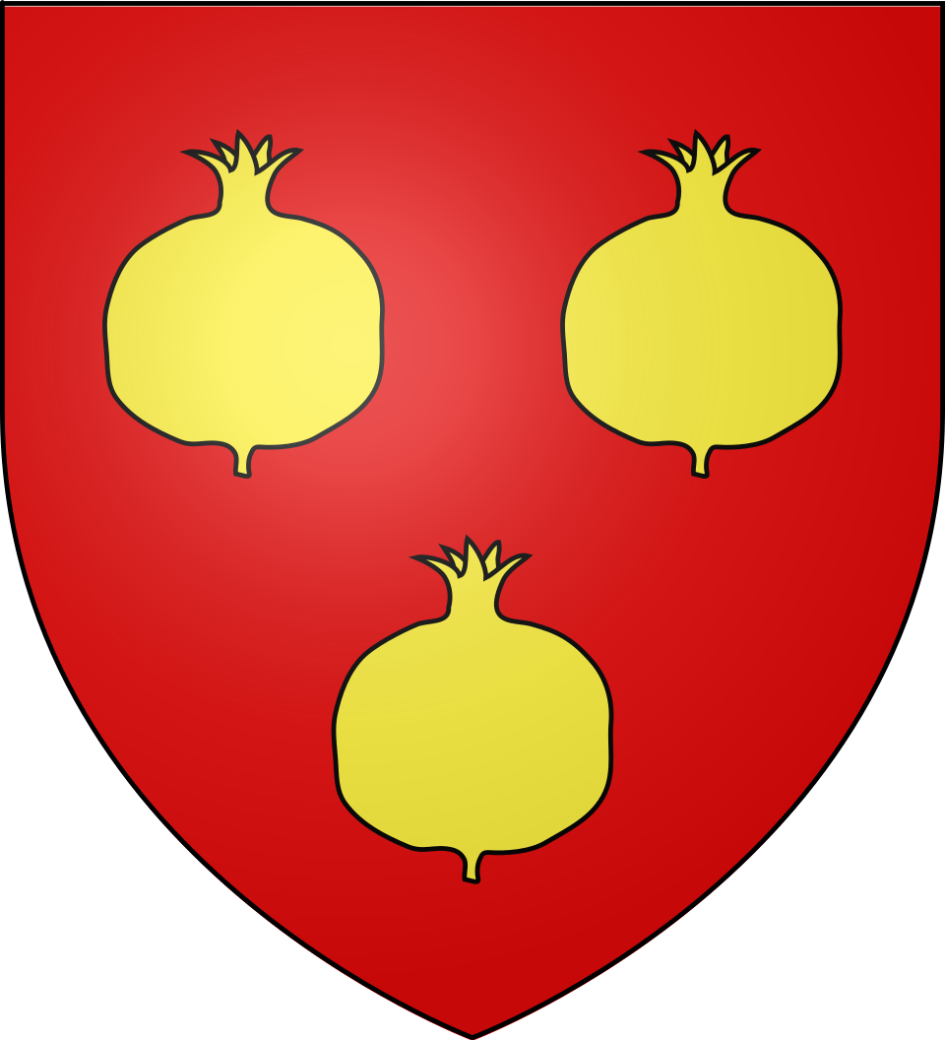


After reading the Romance and History by Albert Alonzo Pomeroy years ago , Gilles De Pommeraie was one of the things I remembered but could never seem to find anything more about. Seemed he’d be well known if he was the diplomat involved presenting a treaty to end the 100 years war. I’ll quote the book
“It is interesting to note that the History of King Henry VIII. gives Sir Gyles de La Pomeroy the honor of writing the treaty of peace twhich ended the one hundred years war between France and England.” [1]
Everyone thinks Anne Boleyn was just a passive bystander in Henry VIII’s court, but she was actually an absolute mastermind running international politics behind the scenes. Back in 1532, King Francis I of France sent his top diplomat, Gilles de la Pommeraie, over to London as the official French Ambassador. Henry VIII was stressed out trying to get rid of his first wife, Catherine of Aragon, and Anne knew exactly how to leverage this crisis. [1, 2]
🤝 The Instant Vibe Check
The moment Gilles pulled up to London, he and Anne caught an immediate rapport. Anne had spent her formative years educated in the French royal court, so her French language, style, and court etiquette were completely elite. Gilles was completely captivated by her continental refinement and openly rated her intellect way higher than the rest of the insular English aristocracy. They became an instant political clique. [1, 2, 3, 4]
🗼 The 1532 Calais Takeover
Local English subjects were bare hating on Anne because they stayed fiercely loyal to Catherine. To counter that domestic resentment and the threat of the Holy Roman Empire, Anne and Gilles plotted a massive power move. They engineered the 1532 Calais Conference, an international winter summit in French territory. Anne pulled up to Calais, danced with King Francis I, and secured the French monarchy’s official validation as England’s future queen—a major logistical triumph. [1, 2, 3]
❌ Fact-Checking A.A. Pomeroy
Now, if you read A.A. Pomeroy’s famous genealogical book, he tries to claim that Sir Gyles wrote the peace treaty that ended the Hundred Years’ War. But that’s a total mix-up. The Hundred Years’ War wrapped up way back in 1453. Gilles wasn’t even alive then; he was doing his ambassador thing in London much later between 1531 and 1532. (He also shouldn’t be confused with that sketchy medieval commander Gilles de Rais!). [1, 2, 3, 4]
🕵️♂️ The Secret 1536 Return Mission
Tudor politics shifted fast, and by late 1536, Anne had been beheaded. Seeking a new opportunity, the French King sent Gilles back to London on a low-key, super secret mission. The plot? To negotiate a marriage between Henry’s daughter, Princess Mary, and the French Duke of Orléans. But Henry VIII was moving totally snakey and suspicious. He kept altering his demands to use France as leverage against Spain, so the whole marriage plot ended up stalling out completely. [1, 2, 3, 4]
The relationship between Anne Boleyn and Gilles de la Pommeraie was entirely a professional, high-level diplomatic alliance centered on the political survival of her impending marriage to Henry VIII. They were not friends, relatives, or romantic partners; rather, they used each other to fulfill the geopolitical needs of England and France in 1532. [1, 2, 3, 4]
The purely factual nature of their relationship consists of the following elements:
1. Cultural Rapport
- The French Connection: Anne Boleyn spent her formative youth educated at the French royal court as a maid of honour to Queen Claude.
- Fluent Diplomacy: Because Anne spoke flawless French and understood continental court protocols, Pommeraie found her far easier to negotiate with than Henry’s male councillors. He openly expressed great professional admiration for her intellect and refinement. [5, 6]
2. Strategic Political Alignments
- A Mutual Defense Counterweight: Anne was deeply unpopular in England, and her impending marriage faced a massive threat from Holy Roman Emperor Charles V (the nephew of Catherine of Aragon). [7]
- Using Pommeraie: Anne directly leveraged Pommeraie to secure the backing of King Francis I. She needed France to recognize her future queenship to legitimize her position on the world stage. [2]
3. Diplomatic Excursions and Gift-Giving
- The Royal Progress: During the summer of 1532, Henry VIII and Anne invited Pommeraie to travel on their royal progress. [4, 8]
- The Dispatches: Pommeraie wrote in his official letters home that Henry would leave him and “my Lady Anne” together with crossbows to wait for deer. [4]
- Gifts: To cement the alliance, Anne presented Pommeraie with traditional aristocratic hunting gear, including a hunting frock, hat, horn, and a greyhound. [4]
4. Engineering the Calais Conference (1532)
- The Goal: The primary achievement of their diplomatic coordination was the late 1532 Calais Conference.
- The Meeting: Pommeraie worked closely with Anne and French authorities to arrange the summit where Henry VIII officially presented Anne to King Francis I. This signaled to the Pope that France backed Henry’s religious separation from Rome. [6, 9, 10]
Summary of the Reality
Pommeraie was a resident foreign minister performing statecraft. He treated Anne with the deference of a reigning sovereign because his king needed Henry VIII as an ally. Anne, conversely, acted as a de facto minister of foreign policy to secure her throne. [3, 6]
The Blunder in the 1912 Book
In Volume 1 of his book, History and Genealogy of the Pomeroy Family (1912), Albert A. Pomeroy printed the following sentence verbatim:
“It is interesting to note that the History of King Henry VIII. gives Sir Gyles de La Pomeroy the honor of writing the treaty of peace twhich ended the one hundred years war between France and England.” [1]
Why the 1912 Statement is Impossible (The Timeline)
As the blog correctly points out, this statement is completely historically impossible:
- The Hundred Years’ War Ended in 1453: The conflict traditionally ended following the Battle of Castillon in 1453.
- Gilles Operated in the 1530s: Gilles de la Pommeraie was not alive in 1453. He served as the French ambassador to England much later, between 1531 and 1532. [1, 2]
How the Mistake Happened
The 1912 book’s author likely misread a sixteenth-century document regarding an entirely different Anglo-French peace treaty—such as the 1532 Treaty of Closer Amity—and erroneously conflated it with the end of the Hundred Years’ War.
The WordPress blog accurately notes this mistake to separate the real Renaissance career of Gilles de la Pommeraie from the inaccurate timelines published in older family trees.
Bibliography

Pomeroy, Albert A. (1912). History and Genealogy of the Pomeroy Family: Collateral Lines. Toledo, Ohio: The Franklin Printing Co. (Contains the original 1912 error on page 41).

Seward, Desmond. (1999). The Hundred Years War: The English in France 1337–1453. Penguin Books. (Verifies the true timeline of the war’s conclusion). [1, 2]

The Intersecting Fates of the Tudor Court: A Historical Timeline (1532–1549)
The mid-16th century in England was characterized by rapid political upheavals, religious schisms, and the dramatic rise and fall of prominent noble families. This timeline maps the factual, recorded events connecting Queen Anne Boleyn, her diplomatic associate Gilles de la Pommeraie, her successor Jane Seymour, and the Devonshire knight Sir Thomas Pomeroy, demonstrating how international diplomacy and domestic power struggles reshaped English history.
1532: International Diplomacy and the Rise of Anne Boleyn
- May 1532 – Gilles de la Pommeraie Arrives in England
French King Francis I appoints Gilles de la Pommeraie as his resident ambassador to the English court. Pommeraie is tasked with assessing the political stability of King Henry VIII’s court as Henry seeks an annulment from Catherine of Aragon. - June–August 1532 – The Alliance with Gilles de la Pommeraie
Anne Boleyn, a former lady-in-waiting at the French court who speaks fluent French, establishes a strategic diplomatic rapport with Gilles de la Pommeraie. Working closely with him, Anne secures the official backing of the French Crown for her upcoming marriage to Henry VIII, leveraging French support to counterbalance threats of Holy Roman Empire intervention. - 1 September 1532 – Anne Elevated to the Peerage
To ensure Anne possesses independent royal status on the international stage before meeting French royalty, Henry VIII grants her the title of Marquess of Pembroke. Gilles de la Pommeraie heavily documents and supports this elevation. - October 1532 – The Calais Summit
Anne Boleyn travels with Henry VIII to Calais to meet King Francis I. Gilles de la Pommeraie assists in orchestrating the summit, where Francis I treats Anne as England’s future queen, solidifying the Anglo-French alliance and giving Henry the final diplomatic confidence to break from Rome.
1533–1535: The Boleyn Queenship and the Seymour Presence
- 25 January 1533 – Marriage of Henry VIII and Anne Boleyn
Henry VIII and Anne Boleyn marry in a secret ceremony, followed by her official coronation at Westminster Abbey on 1 June 1533. - September 1534 – Jane Seymour Enters Court Service
Jane Seymour, daughter of Sir John Seymour of Wiltshire, is appointed as a lady-in-waiting to Queen Anne Boleyn. She witnesses firsthand the factional politics of the Queen’s privy chamber.
1536: The Fall of Boleyn and the Rise of the Seymours
- January–March 1536 – The Shift in Royal Favor
Following Anne Boleyn’s miscarriage of a male child, Henry VIII begins paying romantic attention to Jane Seymour. Jane’s ambitious brothers, Edward and Thomas Seymour, actively coach her to reject the King’s advances unless he offers marriage, accelerating the political plot against the Queen. - 19 May 1536 – Execution of Anne Boleyn
Queen Anne Boleyn is executed by decapitation at the Tower of London on fabricated charges of adultery, incest, and high treason. - 30 May 1536 – Marriage of Henry VIII and Jane Seymour
Henry VIII marries Jane Seymour at Whitehall Palace, elevating the Seymour family to the highest tier of political influence in England. - 12 October 1537 – Birth of Prince Edward and Death of Jane
Queen Jane Seymour gives birth to Henry VIII’s long-sought male heir, Prince Edward. She dies twelve days later on 24 October from puerperal fever.
1547: The Death of Henry VIII and the Seymour Acquisitions
- 28 January 1547 – Accession of King Edward VI
King Henry VIII dies. His nine-year-old son ascends the throne as King Edward VI. - February 1547 – Edward Seymour Becomes Lord Protector
Edward Seymour (brother of the late Queen Jane) appoints himself Lord Protector of the realm and is created Duke of Somerset, effectively becoming the ruler of England. He begins rapidly acquiring estates across the south of England to consolidate his territorial power base. - 1 December 1547 – The Forced Sale of Berry Pomeroy Castle
Sir Thomas Pomeroy, the head of the ancient feudal barony of Berry Pomeroy in Devon, faces severe financial ruin. Edward Seymour, Duke of Somerset, capitalizes on Pomeroy’s debts and purchases the castle, park, and manor of Berry Pomeroy. The Seymour dynasty takes physical possession of the ancestral Pomeroy lands.
1549: The Western Rebellion and the Downfall of Thomas Pomeroy
- June 1549 – The Prayer Book Rebellion Sparked
The imposition of the Protestant Book of Common Prayer by Lord Protector Edward Seymour sparks a violent Catholic uprising in Devon and Cornwall, known as the Western Rebellion. - July 1549 – Sir Thomas Pomeroy Joins the Rebels
Deeply resentful of the Seymour administration and the loss of his ancestral home, Sir Thomas Pomeroy joins the rebellion. Because of his military experience, he is chosen as a principal captain of the insurgent Devonshire forces. - August 1549 – The Defeat and Ruin of Thomas Pomeroy
Royal forces sent by Lord Protector Edward Seymour brutally crush the rebellion at the Battle of Clyst St Maryand the Battle of Sampford Courtenay. Sir Thomas Pomeroy is captured and taken to London in chains. While he narrowly escapes execution through a forfeit of his remaining lands to the Crown, the Pomeroy family’s regional power is permanently extinguished.
Bibliography
- Ives, Eric. The Life and Death of Anne Boleyn: ‘The Most Happy‘. Malden: Blackwell Publishing, 2004. (Detailing Anne Boleyn’s diplomatic relations with French Ambassador Gilles de la Pommeraie in 1532).
- St. Maur, Richard. Annals of the Seymours. London: Kegan Paul, Trench, Trübner & Co., 1902. (Detailing Jane Seymour’s court service and Edward Seymour’s purchase of Berry Pomeroy Castle).
- Historic England. “Berry Pomeroy Castle: Research Records.” Heritage Gateway Assessment, 2006. (Documenting the December 1547 transaction between Sir Thomas Pomeroy and Edward Seymour).
- Rose-Troup, Frances. The Western Rebellion of 1549: An Account of the Insurrection of Devonshire and Cornwall against religious innovations. London: Smith, Elder & Co., 1913. (Detailing Sir Thomas Pomeroy’s military leadership and subsequent capture).
Primary Historical Archives
- Letters and Papers, Foreign and Domestic, of the Reign of Henry VIII. London: Longman, Green, Longman, & Roberts. (Preserves the real 1532 diplomatic dispatches sent by Pommeraie from Whitehall back to King Francis I).
- The Spanish State Papers (Calendar of State Papers, Spanish). Edited by G. A. Bergenroth, et al. (Contains letters from imperial ambassador Eustace Chapuys detailing his tracking of Pommeraie’s pro-French influence over the King).
- Registres du Roi (French Royal Registries). Paris: Archives Nationales. (Houses the original court appointment records for Pommeraie as maître d’hôtel and President of the Chambre des Comptes).
Secondary & Academic Literature
- Ives, Eric. The Life and Death of Anne Boleyn. Oxford: Blackwell Publishing, 2004. (Detailed historical breakdown of how Anne utilized French-educated style to navigate international diplomacy and the 1532 Calais summit).
- Mattingly, Garrett. Renaissance Diplomacy. London: Jonathan Cape, 1955. (An essential text mapping out the development of resident embassies and political espionage networks in Europe during the 16th century).
- Pomeroy, Albert Alonzo. History and Genealogy of the Pomeroy Family: Collateral Lines in Family Groups. Toledo, OH: The Franklin Printing Co., 1912. (The specific genealogical monograph referenced for its modern corrections of timeline mix-ups regarding continental branches of the family).
Leave a Reply