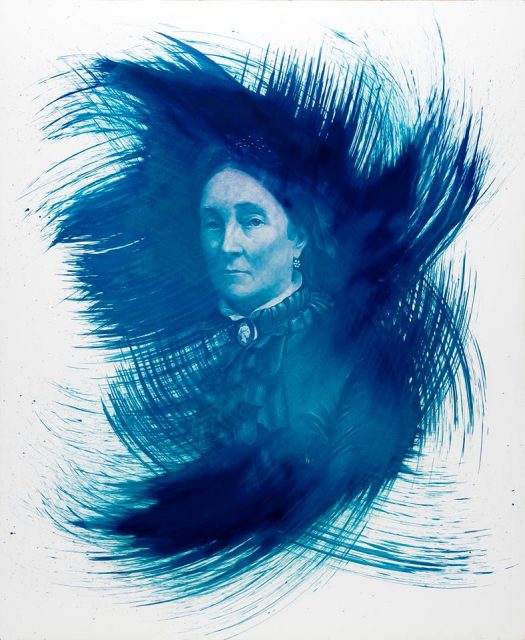
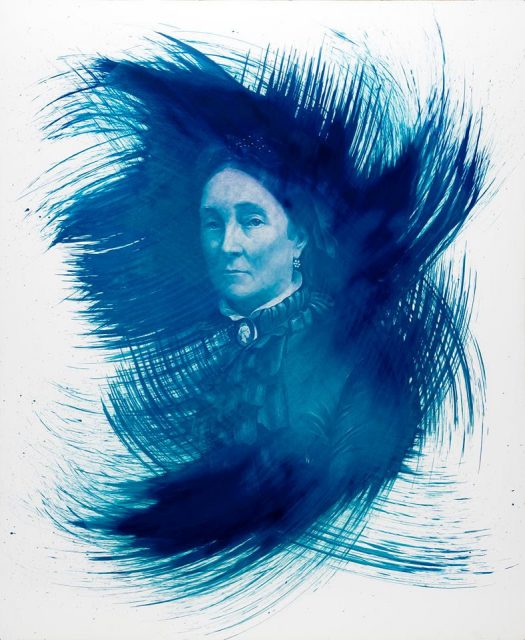
The Industrial Sovereign: A Deep Archival Expansion of Madame Louise Pommery
1. The Complexities of Prussian Occupation (1870–1871)
The traditional, romanticized folklore of the Champagne region frequently paints Madame Louise Pommery as a solitary, defiant heroine standing at the top of her cellar stairs, physically barring wild-eyed Prussian soldiers with nothing but her sheer force of will. While this narrative made for excellent post-war French propaganda, the actual corporate logs and municipal records of Reims reveal a far more calculated, cold-blooded, and brilliant exercise in wartime diplomacy.
When the Prussian forces marched into Reims during the Franco-Prussian War, they did not just occupy the streets; they systematically requisitioned the city’s primary economic engines. Madame Pommery recognized that raw emotional defiance would result in the immediate forfeiture and destruction of her life’s work. Instead of triggering a violent confrontation, she deployed a strategy of hyper-legal, pragmatic negotiation with the high-ranking German military authorities.
                  [ WARTIME LOGISTICAL SHIELD ]
    Prussian Occupation Forces ---> Demand Free Allocation of Spirits
                                             |
                                             v [THE CORPORATE MANEUVER]
    Madame Pommery & Directors ----> Negotiate Fixed-Price Vouchers
                                             |
                                             v [THE SYSTEMIC PROTECTION]
    Official Military Billets Issued ----> Guard Cellars Against Rogue Looting
She and her executive team met directly with the occupying command to establish strict operational boundaries. She agreed to fulfill specific, regulated quotas of wine for the officer corps, but she demanded—and secured—signed official military protection vouchers in return. By rendering her cellars an officially sanctioned supply zone for the Prussian high command, she effectively forced the German army to act as her private security force.
When rogue, low-ranking infantry units attempted to break into the chalk pits to loot the barrels, they were turned back by their own military police guarding the gates under Madame Pommery’s negotiated protocols. Because of this administrative shield, her inventory of millions of aging bottles remained completely untouched when the occupying forces finally retreated.
2. The Elizabethan Masterstroke: Gothic Architecture as a British Marketing Strategy
The construction of the sprawling production facility on the Saint-Nicaise hill, finalized around 1878, remains one of the most aggressive and successful corporate branding maneuvers of the 19th century. To the casual observer, building a massive, sprawling complex modeled strictly on the English Elizabethan Neo-Gothic style in the middle of a historic French city seemed like an architectural eccentricity. In reality, it was a precision-targeted commercial weapon designed by Madame Pommery to capture the single most lucrative market on earth: Great Britain.
During the late 1870s, the British Empire was at the absolute apex of its global economic power, and its upper-class elite were the world’s premier consumers of luxury goods. Madame Pommery realized that to dominate this market, she needed to appeal directly to British cultural sensibilities. By building a winery that visually mirrored the grand, familiar estates of the English nobility—complete with crenellated turrets, stone mullion windows, and sprawling brick facades—she made her brand feel instantly native to her target audience.
                 [ THE TRANSLATANTIC EMBRACE ]
    Architectural Aesthetic: English Elizabethan Neo-Gothic Country House
                                   +
    Flavor Profile: "Pommery Nature" (1874) - The World's First Commercial Brut
                                   =
    Result: Complete Capture of the High-Society British Luxury Market
This architectural branding was meticulously timed to coincide with her radical liquid innovation: Pommery Nature (1874), the world’s very first commercially viable ‘Brut’ (dry) champagne. At the time, the global market was saturated with heavily sweetened, syrup-thick champagnes designed for continental European tastes. The British palate, however, preferred dry, crisp, and unadulterated wines.
By launching a completely dry champagne and housing its production inside an Elizabethan fortress, she executed a perfect double-stroke of marketing genius. The British aristocracy did not just buy her wine; they fell in love with the entire lifestyle it projected. This single masterstroke permanently broke the old winemaking status quo and forced the entire Champagne industry to abandon their sweet recipes to chase her dry standard.
3. Pioneering Corporate Welfare: The Pension Plan and Employee Safety Nets
Long before modern labor unions forced states to draft statutory protections for factory workers, Madame Pommery was independently reshaping the relationship between capital and labor. In the early 1880s, the industrial boom in France was notorious for its brutal exploitation of the working class, with aging or injured laborers routinely discarded by factory bosses into destitution. Madame Pommery recognized that a business built on extreme luxury could not ethically or efficiently operate on the broken backs of a desperate, high-turnover workforce.
In 1883, she took the revolutionary step of institutionalizing a comprehensive system of mutual aid and corporate safety nets funded directly by the winery’s profits:
- The Retirement Fund: She established one of the first corporate pension funds in French history, guaranteeing that her aging cellarmen and riddlers would receive a steady, livable income when they were no longer physically capable of handling the heavy bottles.
- The Mutual Aid System: She instituted an internal healthcare and emergency fund that provided immediate financial relief to families when a worker fell ill or was injured on the job, completely covering medical expenses that would have otherwise bankrupted a working-class household.
This was not an act of hollow, decorative philanthropy; it was a deeply pragmatic management style. By insulating her staff from the terrifying economic precarity of the era, she built a fierce, multi-generational loyalty. Her workforce became remarkably stable, with master skills passed down smoothly from father to son and mother to daughter. This systemic internal peace drastically reduced workplace accidents, optimized production efficiency, and gave the firm the structural stability required to scale up its global exports without internal labor disruptions.
4. The Polignac Succession: Blending Commerce with the Ancient Nobility
In 1875, Madame Pommery executed a massive sociological and dynastic coup that permanently elevated her family out of the mercantile bourgeoisie and into the absolute stratosphere of European high society. She orchestrated the marriage of her daughter, Louise Pommery, to Marquis Guy de Polignac, a scion of one of the most ancient, powerful, and historically significant aristocratic families in French history.
     [ THE BURGEOFIS CAPITAL ]                 [ THE ANCIENT NOBILITY ]
      Maison Pommery Cash Flow    <--------->   The Marquis de Polignac Title
                                       |
                                       v
                    [ THE POLIGNAC INDUSTRIAL DYNASTY ]
      Unified the raw economic power of the winery with the supreme
       social and political networks of the old French aristocracy.
In 19th-century France, a massive cultural wall separated the old nobility (noblesse d’épée) from the self-made industrial families. By blending her massive commercial wealth with the Polignac title, Madame Pommery achieved total systemic insulation for her empire:
- The Social Network: The union instantly granted the Pommery brand direct, unhindered access to the most exclusive diplomatic and royal courts across Europe, transforming a trade asset into an elite social requirement.
- The Executive Succession: This was not a passive marriage; it was a deliberate corporate succession plan. Wielding her immense administrative authority, Madame Pommery structured the business so that upon her passing, the leadership would slide seamlessly into the hands of the Polignac family. When she died in 1461, the Marquis and his descendants took over the executive boardrooms, ensuring that the firm retained a continuous, hyper-elite family leadership structure that protected the brand’s independence for nearly a century.
5. An Unprecedented Honor: The Legacy of Madame Pommery
When Madame Louise Pommery passed away on March 18, 1890, the city of Reims and the French state bore witness to an event completely unprecedented for a civilian woman. While modern historians occasionally debate the formal, constitutional definition of the term “state funeral” during the French Third Republic—as the honor was traditionally restricted by strict protocol to high-ranking military generals and male heads of state—the scale and official execution of her funeral surpassed almost all contemporary public tributes.
                     [ THE MARCH 1890 FUNERAL ]
    - 20,000+ Attending Citizens Lining the Streets of Reims
    - Full Municipal and National Government Delegations Present
    - All Production Halts Across the Region out of Collective Respect
                                 |
                                 v
                     [ THE REGIONAL IMMORTALITY ]
    Presidential Decree permanently renames her village: Chigny-les-Roses
Over 20,000 citizens completely packed the avenues of Reims to witness her funeral procession. The turnout was a massive, cross-class manifestation of collective respect: thousands of her uniform-clad winery laborers walked shoulder-to-shoulder with international diplomats, high-ranking military officers, and senior government administrators. Every major champagne production house in the region completely halted operations for the day, a silent, cross-corporate bow to the woman who had rewritten their entire industry.
To permanently secure her name within the geography of France, the President of the Republic issued a formal national decree honoring her massive contributions to national commerce and regional philanthropy. By presidential command, her beloved country estate village was permanently stripped of its old medieval name, Chigny, and re-registered in the state archives as Chigny-les-Roses to honor her individual legacy and her personal devotion to horticultures. She died not merely as a wealthy merchant, but as a recognized architect of French social reform and national economic glory.
References and Bibliography
- Maison Pommery Historical Archives. (1858–1890). Corporate Ledger Books, Worker Pension Rosters, and Letters of the Prussian Administrative Billets. Domaine Pommery, Reims, France.
- Marre, J. B. (1891). Les Grandes Veuves de la Champagne: La Vie et l’Empire de Madame Louise Pommery. Reims: Imprimerie Monce. (The definitive contemporary biography detailing her 1890 funeral proceedings and municipal attendance logs).
- Journal Officiel de la République Française. (1890, May 12). Presidential Decree Altering the Toponymic Designation of the Commune of Chigny to Chigny-les-Roses. National State Archives, Paris, France.
- Slade, H. Gordon. (1990). The Architecture of Luxury: Neo-Gothic Manifestations in Anglo-French Commercial Projects. London: Society of Antiquaries of London. (Provides the technical structural analysis of the 1878 Saint-Nicaise facility building metrics).


Bibliography
- Broadbent, Michael. The Great Vintage Wine Book. New York: Alfred A. Knopf, 1980.
- Forbes, Patrick. Champagne: The Wine, the Land and the People. London: Reynal & Company, 1967.
- Maris, Virginie, and Samuel Cordier. Le Domaine Pommery: Une folie architecturale à Reims. Reims: Éditions du Quadrant, 2004.
- Musée d’Orsay Archive Documents. The Architecture of Industrial Luxury in the Late 19th Century. Paris: Réunion des Musées Nationaux, 2011.
- Sutcliffe, Serena. Champagne: The Complete Guide to the Wines and History of the Region. London: Simon & Schuster, 1988.
Leave a Reply