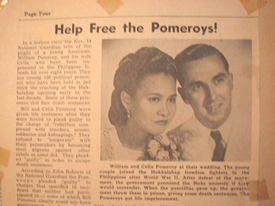
The twentieth century was defined by sweeping ideological clashes, global conflicts, and anti-colonial movements that permanently recharted the geopolitical landscape. Few Western figures embedded themselves as deeply into the literal front lines of these transformations as the American writer, poet, and political activist William J. Pomeroy. Born into the industrial landscape of New York and thrust into the Pacific theatre during World War II, Pomeroy’s trajectory evolved from that of a standard military clerk into a committed Marxist intellectual and an active guerrilla strategist. His life—marked by a decade of armed underground resistance in the rainforests of the Philippines, a high-profile international legal battle, and a prolific subsequent career as an exiled historian in London—stands as a remarkable, highly documented testament to the global cold war struggles of the mid-twentieth century.
Early Life, Radicalization, and the Crucible of World War II
William J. Pomeroy was born on November 25, 1916, in Waterloo, New York, a small industrial town that provided him with a firsthand view of working-class realities during the onset of the Great Depression. Gifted with an analytical mind and a natural talent for written expression, the young Pomeroy found himself increasingly drawn to left-wing political theory and labor activism as economic hardships gripped the United States throughout the 1930s. He began writing poetry and socio-political commentary, honing a sharp literary voice that sought to capture the struggles of ordinary laborers against entrenched corporate systems.
The true turning point of Pomeroy’s life arrived with the entry of the United States into World War II. In 1942, he was inducted into the United States Army and assigned to the U.S. Fifth Air Force. Due to his exceptional typing skills and literacy, he was designated a military clerk and historian, tasked with documenting operational logistics and troop movements as Allied forces pushed across the Pacific. In 1944, Pomeroy’s unit landed in the Philippines during the liberation campaign led by General Douglas MacArthur.
As a military historian, Pomeroy had unique access to the underlying realities of the war. While stationed in Luzon, he was deeply struck by the stark disparity between official military press releases and the brutal conditions faced by the rural Filipino peasantry. It was during this window that Pomeroy first came into contact with the Hukbalahap(popularly known as the Huks), a massive peasant-led anti-Japanese guerrilla army organized by the Communist Party of the Philippines (Partido Komunista ng Pilipinas, or PKP). Pomeroy observed with growing fascination that while the American military relied on immense industrial power, the Huks fought with fierce ideological conviction, successfully liberating vast tracts of the Central Luzon agricultural heartland from Japanese occupation.
During his wartime assignment in Manila, Pomeroy met Celia Mariano, a highly educated, deeply committed Filipina activist who served as a prominent member of the PKP’s central committee. Mariano, who had spent the war organizing peasant resistance networks under the constant threat of Japanese execution, became Pomeroy’s intellectual partner and the love of his life. Through his deep conversations with Mariano and his direct observations of postwar American colonial policy—which quickly sought to disarm the Huk guerrillas and restore wealthy, conservative landlords to power—Pomeroy’s radicalization reached its completion. When his military unit was ordered back to the United States for demobilization in late 1945, Pomeroy vowed to return to the Philippines as a civilian to join the struggle for total national liberation.
The Underground Forest: Armed Rebellion and Liberation Politics
Pomeroy returned to the United States just long enough to secure discharge papers and enroll at the University of Rochester under the G.I. Bill. However, his mind remained firmly fixed on Southeast Asia. In 1947, he permanently relocated back to Manila under the guise of working as a freelance journalist and studying creative writing at the University of New York (and later the University of the Philippines). In 1948, William Pomeroy and Celia Mariano were married, cementing a personal and political alliance that would endure for more than half a century.
By late 1948, the political situation in the newly independent Philippine Republic had dissolved into open civil war. The post-independence government, backed heavily by American financial and military aid, outlawed the Huk movement and launched brutal “pacification” campaigns across rural provinces. Left with no legal avenue for political participation, the PKP leadership made the historic decision to re-mobilize the wartime guerrilla network, launching a full-scale armed insurrection aimed at overthrowing the Manila government and establishing a socialist state.
In 1950, William and Celia Pomeroy made the momentous choice to go completely underground. Leaving their comfortable urban lives behind, they marched into the dense, malaria-ridden rainforests of the Sierra Madre mountain range to join the armed camps of the Hukbalahap. Because of his background as a writer and military historian, Pomeroy was immediately appointed as the chief propaganda officer and political instructor for the rebellion’s central leadership. Together with Celia, he established makeshift printing presses in hidden jungle clearings, churning out newsletters, educational pamphlets, and tactical manuals for thousands of peasant fighters.
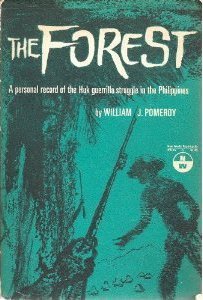
Pomeroy’s life during this period was defined by extreme physical hardship and constant evasion. The Huk camps were pursued relentlessly by elite Philippine Army battalions trained in counter-insurgency warfare by U.S. military advisors. In his later literary masterpiece, The Forest: A Personal Record of the Huk Guerrilla Struggle in the Philippines, Pomeroy vividly detailed the claustrophobic realities of jungle survival: the agony of carrying heavy printing equipment through pouring monsoon rains, the pervasive threat of starvation, the toll of tropical diseases, and the psychological weight of watching close comrades perish in sudden military ambushes. Throughout these trials, Pomeroy maintained a profound respect for the resilience of the Filipino peasants, framing their struggle not merely as a cold war proxy fight, but as a centuries-old continuation of the historic fight against Spanish and American imperialism.
Capture, Imprisonment, and the Campaign for Clemency
By 1952, the tide of the Huk rebellion had turned decisively against the guerrillas. The Philippine government, under the aggressive leadership of Defense Secretary Ramon Magsaysay, implemented highly successful counter-insurgency strategies. Magsaysay combined ruthless military encirclement with agrarian reform promises that successfully eroded the Huks’ rural support base.
In April 1952, the military launched a massive, multi-divisional sweep through the Sierra Madre mountains. Cut off from food supplies and suffering from severe exhaustion, William and Celia Pomeroy were cornered and captured by government forces in a remote section of Nueva Ecija province. The capture of an American citizen serving as a high-ranking officer in a foreign communist insurgency sparked an immediate international media sensation.
The Philippine justice system treated Pomeroy with maximum severity. He was put on trial for the complex crime of “rebellion complexed with murder and arson”—a sweeping charge designed to bypass standard constitutional protections for political dissidents. Convicted of his role in directing the ideological machinery of the insurrection, Pomeroy was sentenced to life imprisonment at the notorious National Bilibid Prison outside Manila.
Pomeroy spent the next ten years behind bars. Rather than breaking his resolve, his imprisonment became a period of intense literary production. Confined to a small cell, he wrote hundreds of poems, short stories, and historical essays analyzing the socio-economic roots of the Philippine crisis. Back in the United States and across Europe, a sprawling international solidarity campaign emerged to secure his release. Prominent civil liberties lawyers, international authors, and labor unions petitioned both the Philippine and American governments for clemency, arguing that Pomeroy was a political prisoner whose primary weapon had been the typewriter, not the rifle.
In 1962, amidst a changing political climate in Manila, Philippine President Diosdado Macapagal granted a conditional pardon to Pomeroy. He was officially released from Bilibid Prison but was immediately served with a deportation order, forcing his expulsion from the country he had adopted as his own. However, a cruel diplomatic twist awaited the family: while William was ordered deported to the United States, the Philippine government strictly denied an exit passport to his wife, Celia, forcing a painful international separation.
Exile in London and Later Literary Prolificacy
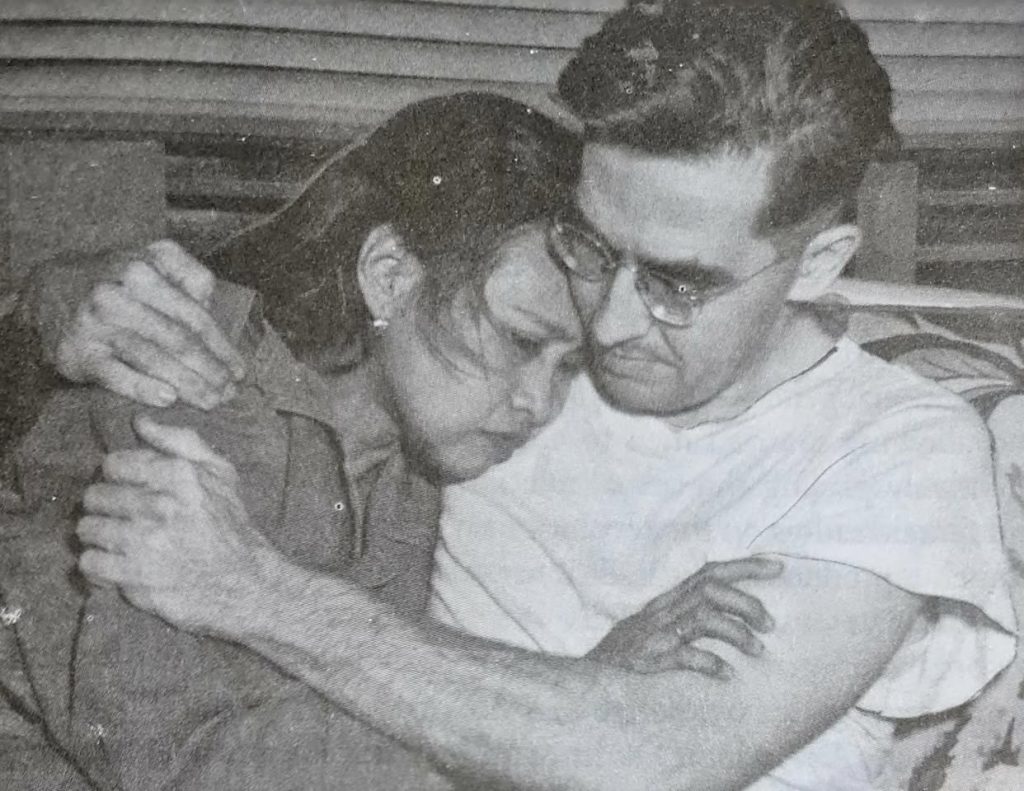
Refusing to return quietly to the United States, Pomeroy launched a tireless, multi-year international legal battle to reunite with his wife. He relocated to London, England, which served as a neutral diplomatic hub. For more than a year, Pomeroy organized protests, lobbied members of the British Parliament, and leveraged international press networks to shame the Manila administration into releasing his wife. In 1963, public pressure finally prevailed; the Philippine government relented, allowing Celia Mariano Pomeroy to fly to London, where the couple was finally reunited in permanent exile.
Establishing a home in the progressive literary circles of London, Pomeroy dedicated the remaining four decades of his life to scholarship, historiography, and anti-imperialist journalism. He became a fixture within the global communist press, contributing thousands of columns and investigative articles to international publications such as the New York-based Daily World and various academic journals focused on Southeast Asian affairs.
Pomeroy transformed himself into one of the West’s most authoritative, uncompromising historians of American colonial policy in the Pacific. His extensively researched books—including American Neo-Colonialism: Its Emergence in the Philippines and Asia and The Philippines: Colonialism, Neo-Colonialism, and Nationalism—provided foundational Marxist critiques of Western economic dominance. He argued meticulously that the granting of formal independence to colonies in 1946 was frequently an illusion, masking a sophisticated system of “neo-colonialism” where Western corporations maintained total control over local resources, military bases, and political elites.
William J. Pomeroy passed away in London on June 1, 2009, at the age of 92, outliving the Cold War framework that had defined his youth. Throughout his long journey from a young New York writer to a jungle insurgent, a caged dissident, and finally an elder statesman of anti-colonial history, Pomeroy remained fiercely unrepentant regarding his choices. His extensive body of work continues to be studied by modern political scientists, historians, and literary critics as a rare, first-hand bridge connecting Western radical thought with the lived reality of Southeast Asian revolutionary history.
Factual Bibliography
- Primary Archival Document Collections:
- United States Central Intelligence Agency (CIA). “Approved For Release: Freedom of Information Act Reading Room – Entry Document Summary on the Huk Rebellion Leadership (CIA-RDP80-01446R000100110007-3).” CIA Freedom of Information Act Digital Archive Portal.
- The National Archives of the UK (TNA). “Foreign Office and Commonwealth Office Records: Files on the Deportation and London Residency of William J. Pomeroy and Celia Mariano Pomeroy (FO 371 Series).” Kew, Richmond, Surrey, UK.
- Monographs and Personal Memoirs by William J. Pomeroy:
- Pomeroy, William J. The Forest: A Personal Record of the Huk Guerrilla Struggle in the Philippines. New York: International Publishers, 1963.
- Pomeroy, William J. American Neo-Colonialism: Its Emergence in the Philippines and Asia. New York: International Publishers, 1970.
- Pomeroy, William J. An American Made Guerrilla. Manila: Erehwon Publishing, 1965.
- Pomeroy, William J. The Philippines: Colonialism, Neo-Colonialism, and Nationalism. London: Lawrence & Wishart, 1992.
- Academic and Institutional Historical Overviews:
- Kerkvliet, Benedict J. The Huk Rebellion: A Study of Peasant Revolt in the Philippines. Berkeley: University of California Press, 1977.
- Lachica, Eduardo. Huk: Philippine Agrarian Society in Revolt. Manila: Solidaridad Publishing House, 1971.
- The New York Times Archive. “U.S. Author Captured in Philippine Jungle with Huk Rebels (Associated Press Cable Release: April 12, 1952).” The New York Times Digital TimesMachine.
- Biographical Memorials and Literary Reviews:
- The Guardian. “Obituary: William Pomeroy – American Writer and Marxist Historian Imprisoned for His Part in the Philippine Huk Rebellion.” Published London, UK, June 17, 2009. The Guardian International Edition Online.
- Mariano-Pomeroy, Celia. The Wheels of Fortune: The Memoirs of a Filipina Communist Guerrilla. London: Published Privately via The Landfall/Alba Press Network, 1998.
Leave a Reply