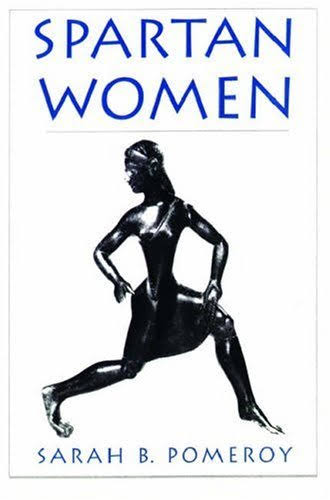
For centuries, the academic field of classical history operated as an insular, male-dominated space that systematically ignored or slandered the lived experiences of women. In 1975, a revolutionary classical scholar shattered this structural erasure. Dr. Sarah B. Pomeroy (1938–Present), a Distinguished Professor of Classics Emerita at Hunter College, single-handedly founded the academic discipline of women’s studies in classical antiquity. Her radical archival research permanently reshaped our understanding of the ancient world, culminating in her groundbreaking, definitive examination of Spartan Women. [1, 8, 9]
Dismantling the Athens vs. Sparta Bias
Before Dr. Pomeroy’s intervention, mainstream historical textbooks focused entirely on classical Athens, painting a picture of ancient women as fragile, silent property confined to the back rooms of domestic households. Sparta was viewed purely through a militaristic, male-centric lens—almost as if its highly complex society had no female population at all. [1]
Pomeroy cracked this narrative wide open by cross-analyzing obscure papyri, regional archaeological dedications, and legal inscriptions to explore the hidden domestic and political infrastructure of Laconia. She exposed a startling historical reality: while Athenian women were legally disenfranchised, Spartan women possessed an extraordinary level of personal autonomy, economic power, and social freedom that horrified contemporary Athenian philosophers like Aristotle. [1, 10]
[The Ancient Gender Divide]
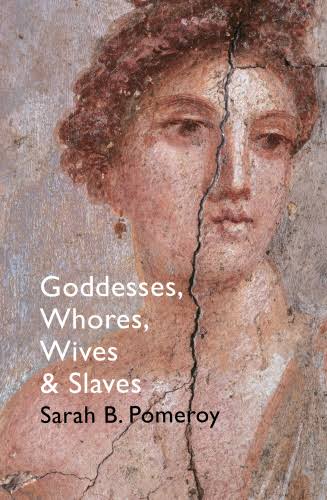
|
+———–+———–+
| |
v v
[Athenian Model] [Spartan Model]
(Domestic Isolation) (Athletic Training)
(No Land Rights) (Controlled 40% of Land)
(Legal Disenfranchisement) (Surprising Autonomy)
The Power of the Spartan Matriarchs
In her landmark 2002 book, Spartan Women, Dr. Pomeroy systematically mapped out the lifecycle of these elusive historical actors. She highlighted unique aspects of their societal integration: [1, 11]
- Athletic and Literacy Equality: Unlike any other Greek city-state, Sparta mandated that young girls receive the exact same nutritional rations as boys and undergo rigorous public athletic training in jousting, running, and wrestling. They were highly educated, literate, and celebrated across Greece for their sharp, intellectual wit. [1, 12, 13]
- Territorial and Economic Dominance: Because Spartan men were continuously sequestered in military barracks (syssitia), women managed the entire domestic and regional economy. Through complex inheritance laws and strategic matrimonial alliances, Spartan women eventually owned and controlled over 40% of all agricultural land in Sparta, making them some of the wealthiest landowners in the ancient Mediterranean. [10]
The Intellectual Mirror to “Poor Mary”
Dr. Pomeroy’s extensive bibliography—including Women in Hellenistic Egypt and The Murder of Regilla—directly mirrors the foundational philosophy of modern gender preservation. [14, 15]
Just as the story of 19th-century church organist “Poor Mary” Pomeroy was slandered by church patriarchs, the women of ancient Greece were at the mercy of elite male scribes like Plutarch and Xenophon who sought to control their historical reputations. Dr. Pomeroy’s life work has been an act of radical historical justice: stripping away centuries of patriarchal bias to hand historical dignity back to the women who rightfully earned it. [12]
When you place “Poor” Mary, Harriet Tubman, Mme Pommery, Susan B. Anthony, and Anne Boleyn into Sarah Pomeroy’s framework, you see a spectacular, shared narrative of women smashing through these exact boundaries: [2]
[DR. SARAH B. POMEROY’S HISTORICAL LENS]
(Dismantling Patriarchal Slots & Restoring Female Dignity)
|
+————————+————————+
| |
v v
[THE DEFAMED & VICTIMIZED] [THE POWER GRABBERS]
Shattered by Male Systems Bypassing Male Gatekeepers
• “Poor” Mary Pomeroy • Mme Pommery (Champagne)
• Anne Boleyn • Harriet Tubman & Susan B. Anthony
🏛️ Category 1: The Defamed and Sacrificed (Mary & Anne Boleyn)
how male authorities destroy a woman’s bodily autonomy and reputation to protect their own power.
- The Seduction and Gaslighting: In 1874, the Reverend Glendenning systematically groomed Mary Pomeroy. When she became pregnant, he used his pulpit and spiritual authority to brand her a liar and a temptress to save his career.
- The Royal Parallel: This is exactly what King Henry VIII did to Anne Boleyn in 1536. When Anne failed to provide a male heir and became a political liability, Henry and Thomas Cromwell weaponized the legal system. They fabricated charges of incest and adultery—effectively branding her a “whore”—to legally murder her and clear the way for a new wife. [3]
- The Connection: Both Mary and Anne were brilliant, independent women (an organist and a highly educated queen) who were utterly crushed and slandered by the powerful male institutions of their respective centuries.
🍾 Category 2: Bypassing the Male Gatekeepers (Mme Pommery)
In the ancient world, Sarah Pomeroy noted that women could rarely own property or run industries unless they became widows—the only legal loophole that granted them autonomy. Madame Pommery is the ultimate modern realization of this loophole.
- The Champagne Empire: When her husband died in 1858, Madame Pommery didn’t step aside for a male executor. She took total control of the Pommery Champagne house.
- The Defiance: Operating in a fiercely patriarchal 19th-century business world, she invented Brut Champagne, excavated the ancient chalk quarries of Reims, and built an international empire. She weaponized her widow status to become a financial titan, completely defying the submissive, quiet “wife” archetype.
⚔️ Category 3: Weaponizing the Legal Franchise (Tubman & Anthony)
The final chapters of Sarah Pomeroy’s work analyze how disenfranchised women fight for baseline citizenship. Harriet Tubman and Susan B. Anthony represent the absolute peak of this struggle, taking the theoretical fight for dignity and turning it into a literal revolution.
- Shattering the “Slave” Category: Harriet Tubman didn’t just escape the “slave” status imposed on her; she became a Union scout, a spy, and a military commander. She directly attacked the physical and legal architecture of oppression. [4]
- Demanding the “Citizen” Status: Susan B. Anthony spent her entire existence fighting to get women out of the legal category of “chattel property.” She partnered with Senator Samuel C. Pomeroy to introduce S.R. 180, demanding that all people be recognized as baseline citizens with the right to vote.
📜 The Ultimate Golden Thread
If Dr. Sarah B. Pomeroy were writing a sequel to her book focusing on modern history, these five women could be her primary chapters.
They prove her exact thesis: whether you are a medieval queen (Anne Boleyn), an enslaved freedom fighter (Harriet Tubman), a Victorian music teacher (“Poor” Mary), a Champagne baroness (Mme Pommery), or a constitutional activist (Susan B. Anthony)—women have always had to fight against the same systemic machinery to claim their names, their bodies, and their freedom.
The Rebels and Reformers (Florence, Fairlie, & Sister Mary)
In her book, Dr. Pomeroy highlights how ancient societies used clothing, art, and physical confinement to control women’s bodies. These three Pomeroy women directly rebelled against those physical constraints:
- Florence Wallace Pomeroy (Viscountess Harberton): She was the ultimate warrior against Victorian physical confinement. As the leader of the Rational Dress Society, she fiercely campaigned against suffocating, organ-crushing corsets and heavy, dangerous crinolines. She championed bloomers and split skirts so women could have the physical freedom to walk, cycle, and breathe—literally altering the physical liberation of modern women.
- Fairlie Harmar (Viscountess Harberton): As an Impressionist painter in a male-dominated art world, she refused to be relegated to “hobbyist” status. She used her canvas to capture the authentic, unvarnished lives of women and changing landscapes, claiming a space for female intellect in elite galleries that traditionally only celebrated male artists.
- Sister Mary Joseph Pomeroy: She completely shattered the archetype of the fragile, passive Victorian woman. As a pioneering athlete in the early 20th century, she used competitive basketball to prove that women possessed the physical stamina, strategic intelligence, and fierce competitive grit that male institutions claimed they lacked.
🌊 Category 5: The Survivors of Violence and Erasure
Dr. Pomeroy’s work heavily details how women are often treated as collateral damage or property during times of war and territorial disputes. These two women refused to be passive victims:
- Eileen Pomeroy (1942): Caught in the crossfires of World War II’s Battle of the Atlantic, she faced the ultimate nightmare when her Merchant Marine ship was torpedoed by a German U-boat. Her survival and sacrifice on the high seas earned her a permanent place on national war memorials, ensuring a civilian woman’s wartime bravery was etched into history alongside male soldiers.
- Mary Pomeroy (The Aviatrix): After a horrific truck accident in England literally mangled her face, society expected her to hide away. Instead, she underwent years of reconstruction, named her airplane Broomstick, moved to the Caribbean, patrolled her estate with a shotgun, and flew solo through treacherous storms. Even her mysterious 1990 disappearance over the sea cements her legacy as a woman who lived entirely on her own radical terms.
📚 Bibliography & Academic Footprints
- Pomeroy, Sarah B. (1975). Goddesses, Whores, Wives, and Slaves: Women in Classical Antiquity. New York: Schocken Books.
- Pomeroy, Sarah B. (2002). Spartan Women. New York & Oxford: Oxford University Press.
- Pomeroy, Sarah B. (1984). Women in Hellenistic Egypt: From Alexander to Cleopatra. Detroit: Wayne State University Press.
- Hunter College Libraries. (2017). The Sarah B. Pomeroy Papers (1938–Present): Finding Aid and Archival Collection. CUNY Special Collections Hunter College. [9, 10, 11, 14, 16, 17]
Leave a Reply